Technique
Snatch Balance Technique: Move Under the Bar Without Driving It Too High
Use the snatch balance to practise a fast receiving position: dip, drive only enough, move the feet and lock the bar overhead as you descend.
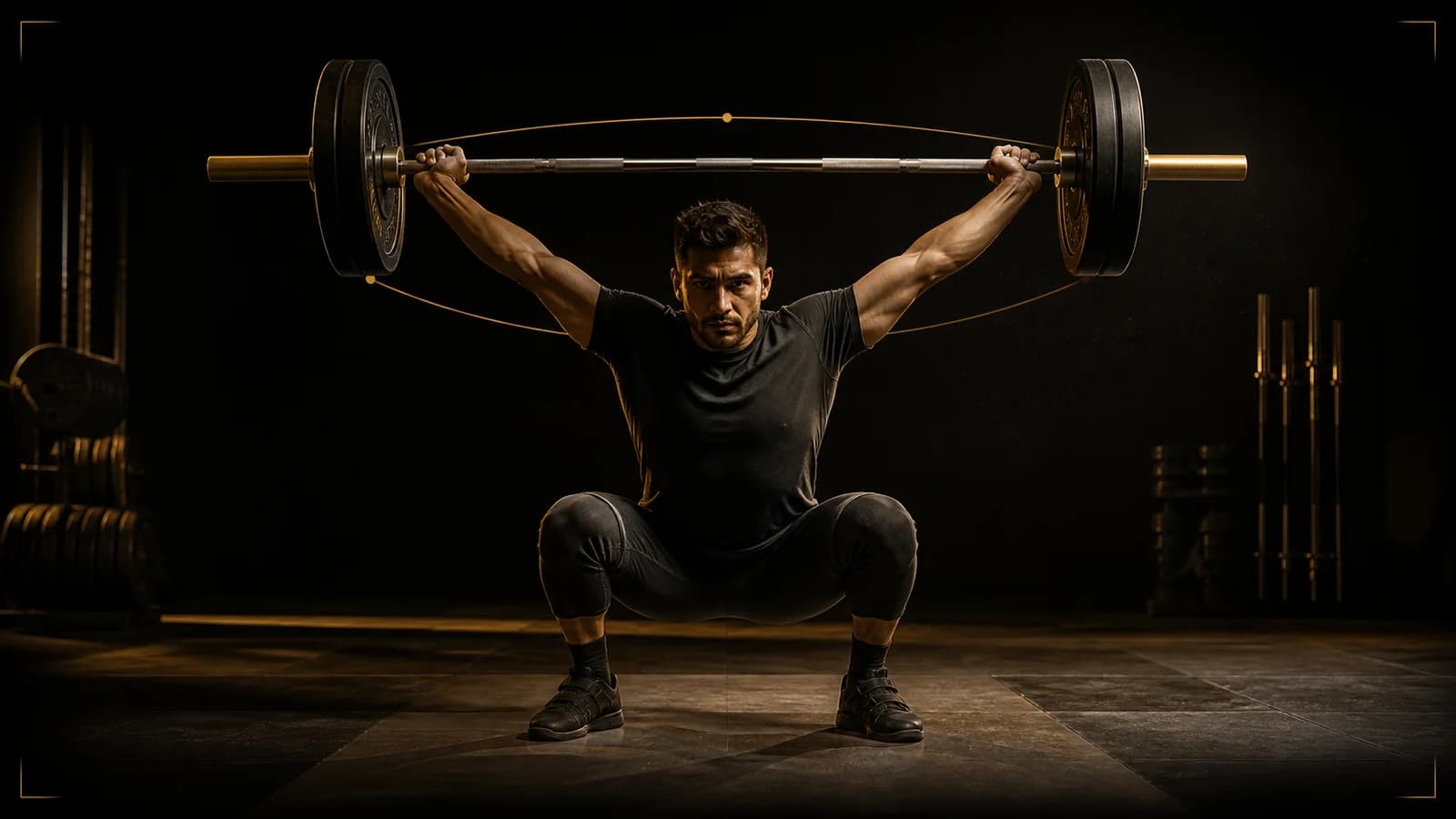
In a snatch balance, dip and drive the bar only enough to create space, then move your feet and body rapidly into the overhead squat while you lock the bar in place. The drill trains commitment and receiving position; it loses that job when you turn it into a high push press followed by a slow squat.
Learn the movement with an experienced weightlifting coach, an empty bar or suitable light load, clear platform space and safe drop rules.
Start from a stable rack position
Take the bar from the rack onto the upper back with your snatch grip. Stand tall with feet in the pulling stance and the whole foot balanced. Keep the grip secure and elbows positioned so the bar does not roll.
Use a rack height that lets you unrack without a calf raise or deep good morning. Step back far enough to miss the rack if you need to drop the bar.
Dip straight, then change direction
Bend knees and hips slightly while keeping pressure through the whole foot and the torso organized. The dip should be short and repeatable. If the hips travel far back or the chest drops, the bar may leave vertically while your body moves elsewhere.
Drive through the legs, then reverse direction quickly. You need enough upward impulse to unload the bar, not maximum bar height.
Move under and lock at the same time
As the bar becomes light, move the feet toward the receiving stance and push your body down. Lock the elbows while the torso descends. Think “fix the bar, move the body” rather than “press it high and squat later.”
Receive with the bar over a base you control, feet planted, and shoulders active. Stabilize before you stand. If the bar sits forward or behind, do not rescue every rep with a step when the drill calls for a fixed receiving position; lower the load and review the path.
The IWF overview of the snatch describes the competition lift as a one-motion movement to locked arms overhead followed by a controlled recovery. The IWF exercise guide includes the snatch balance as a preparation exercise and tells new lifters to start slowly and lightly.
Choose the right variation
| Variation | Use it when |
|---|---|
| Drop snatch | You need to practise moving under without a dip and drive |
| Heaving snatch balance | You are learning the dip, drive and receiving sequence |
| Snatch balance | You can move the feet and lock quickly under a suitable load |
| Overhead squat | You need more time in the receiving position without the dynamic entry |
Names can vary between coaching systems. Agree on the exact movement before loading it.
Fix the common timing errors
- Bar travels too high: reduce the drive and commit under sooner.
- Feet move before the drive finishes: slow the dip and separate the direction change.
- Elbows lock after you reach depth: use a lighter load and finish the lockout earlier.
- Bar moves forward: review dip balance, rack position and overhead alignment.
- You pause halfway down: use a receiving depth you can reach decisively.
One video shows the sequence, not the cause. Mobility, confidence, load and setup can create similar visible errors.
Review the lift in Olympic Lifting AI: Coach
Film from a stable front-oblique angle outside the platform and plate-bounce area. Keep both plates, feet, dip, lockout and full receiving depth visible. Use the same rack position and load when you compare attempts.
Open Olympic Lifting AI: Coach and review dip direction, bar height, foot movement and the moment the elbows lock. Use Coach Ilya's feedback to choose one phase for the next set, then confirm the change with your weightlifting coach.
A short technical block
Warm up the overhead squat, perform several empty-bar drop snatches, then use low-repetition snatch balances at a load you can receive decisively. End the block when lockout, balance or speed changes. The goal is not to prove strength; it is to practise meeting the bar in a stable position.