Technique
Clean and Jerk Technique: Link the Pull, Rack, Dip, and Drive
Break the clean and jerk into setup, pull, turnover, front rack, recovery, dip, drive, catch, and stable finish.
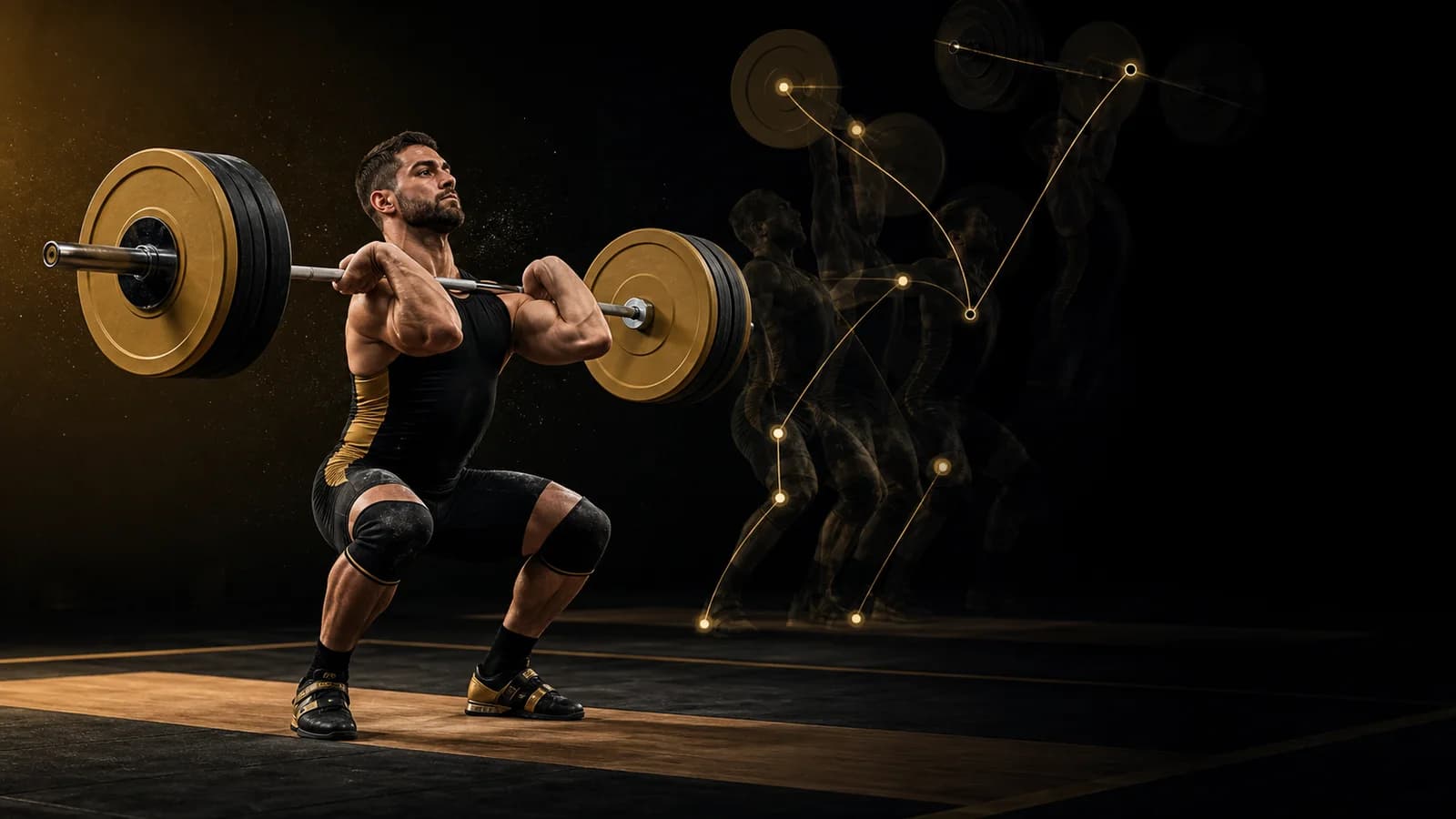
The clean and jerk has two lifts joined by one recovery. In the clean, keep the bar close through the pull, meet it in a secure front rack, and stand before you rush the next phase. In the jerk, organise the grip and breath, dip vertically, drive through the floor, move under the bar, then show a stable overhead finish.
Learn with a qualified weightlifting coach, use appropriate plates and collars, and practise missed-lift exits before heavy attempts.
Clean setup and first pull
Set the feet under the hips, place the bar over the midfoot, and use the grip width your coach selects. Brace before the plates leave the floor. Keep the bar close as the knees move back and the shoulders stay over or slightly ahead of it.
Do not rush the floor. A fast first pull that changes your balance makes the later acceleration harder to time.
Transition and acceleration
As the bar passes the knees, bring the torso and knees into the power position without pushing the bar forward. Extend through the legs and hips while the arms stay long until the lower body has finished its job.
The goal is not to strike the bar away. Keep it close and create room to move down.
Turnover and front rack
Pull under the bar and rotate the elbows through quickly. Receive it across the shoulders with the elbows forward, the whole foot connected to the platform, and a trunk position you can stand from.
If the bar crashes, reduce the load and review whether you stayed connected during the turnover. Do not catch it in the hands with the elbows pointing down.
Recover before the jerk
Stand the clean, settle the feet, and rebuild your breath and grip. The recovery is part of the lift. A rushed dip often starts because the lifter never became stable after the clean.
Dip and drive
Dip a short distance by bending the knees while keeping the bar stacked over the base. Drive upward through the floor and let the legs accelerate the bar before the arms finish.
If the dip moves forward, the bar often follows. Film from the side and compare the bar with the middle of the foot.
Receive and finish
Move under the bar into the split or power position your coach teaches. Lock the elbows, stabilise the shoulders, and recover the feet only after the bar stops moving. In a split jerk, bring the front foot back partway, then the rear foot forward, and finish under control.
| Phase | Review question |
|---|---|
| First pull | Does balance stay over the full foot? |
| Turnover | Do the elbows arrive before the bar crashes? |
| Recovery | Do you stand and reset before dipping? |
| Dip | Does the bar stay vertically stacked? |
| Drive | Do the legs finish before the arms press? |
| Catch | Can you stabilise before recovering? |