
Clean
Power Clean vs Hang Clean: Start Position, Catch, and Purpose
Compare the power clean and hang clean by start position, receiving depth, training purpose, and the technical errors each variation reveals.
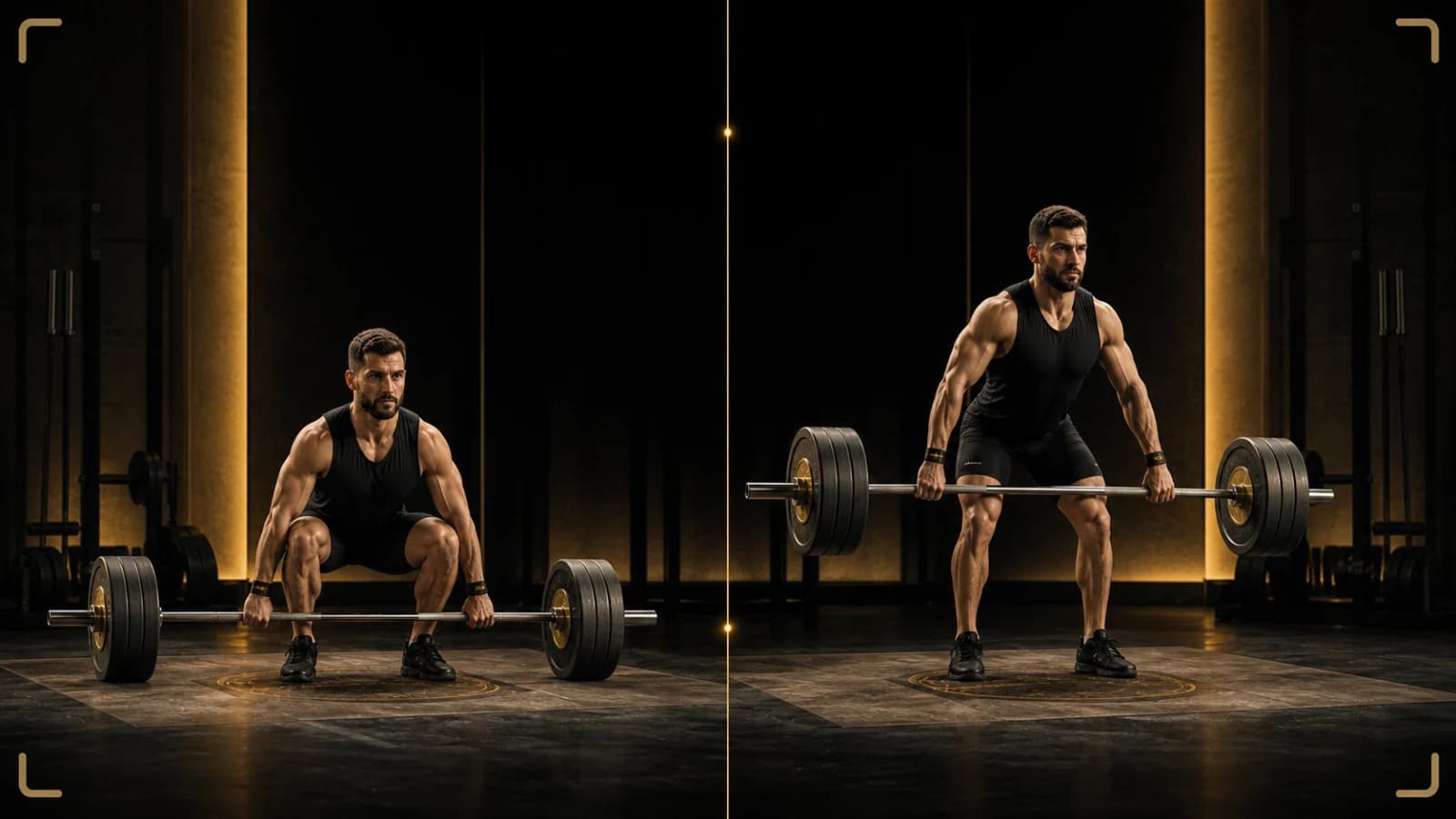
The power clean and hang clean describe different things. A power clean defines the receiving depth: you catch the bar above a full squat. A hang clean defines the start position: you begin with the bar held off the floor, usually above or below the knee. You can therefore perform a hang power clean, a hang clean received deep, or a power clean from the floor.
Use a qualified weightlifting coach, collars, a clear platform, and loads you can control. Stop if pain or loss of balance changes the lift.
The quick comparison
| Feature | Power clean from floor | Hang clean |
|---|---|---|
| Start | Bar rests on platform | Athlete holds bar off floor |
| Definition | Catch stays above full squat | Start comes from a chosen hang height |
| Main demand | First pull plus complete acceleration | Control and acceleration from the hang |
| Common use | Power expression, floor-to-catch timing | Position work, turnover, targeted pull segment |
| Frequent miss | Rushing the bar off the floor | Swinging the bar away during the hinge |
Power clean from the floor
Set the feet, grip, back angle, and balance before the bar leaves the platform. Push through the floor and keep the bar close as the knees move back. Continue into the second pull, then move under the bar and receive it in a stable partial squat.
“Power” does not mean pulling with the arms or catching with straight legs. You still meet the bar by bending the knees and hips. The catch simply stays above the depth your rules or coaching system classifies as a full squat.
Hang clean
Stand the bar up first. Hinge or lower to the prescribed hang position while keeping the bar close and pressure balanced through the foot. Pause if the drill calls for it, then drive from that position and move under the bar.
Above-knee hang work shortens the pull and emphasizes fast extension and turnover. Below-knee hang work adds more positional control and a longer acceleration path. Your coach should choose the height for the problem you need to solve.
Which one should you use?
Use the power clean from the floor when you need the complete start-to-catch sequence or when your sport programme uses the lift for power. Use a hang variation when you want to remove the first pull, repeat a specific position, or expose whether you can keep the bar close during the hinge and acceleration.
Neither variation automatically fixes the other. A strong hang clean can hide a weak start from the floor. A heavy power clean can hide poor turnover if the athlete pulls the bar unusually high.
Receiving position matters
Meet the bar with elbows moving quickly around, the trunk braced, and the feet landing in a stable position. Do not crash the bar onto the shoulders or let the knees collapse inward.
If the bar rises high but the catch feels slow, reduce load and practise moving under. If the bar loops forward, review the bar-body distance before adding more pull.
The International Weightlifting Federation technical and competition rules define the competition lifts and judging context. Power and hang variations remain training exercises rather than separate competition lifts.
A simple comparison session
- Warm up with an empty bar and clean pulls.
- Record three light power cleans from the floor.
- Record three hang cleans from the prescribed height.
- Compare start balance, closest bar position, extension timing, and catch.
- Choose one variation for the next work set based on the technical goal.